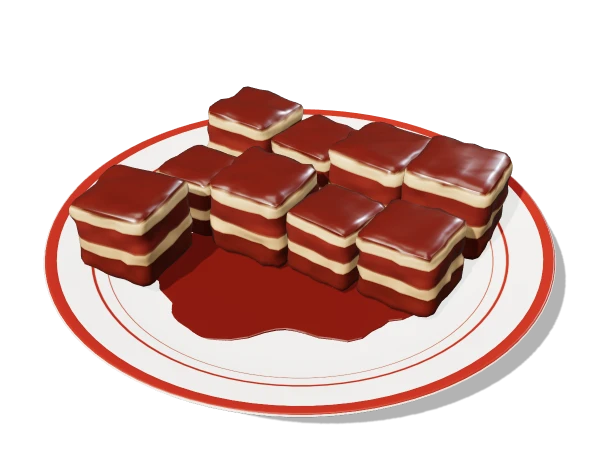
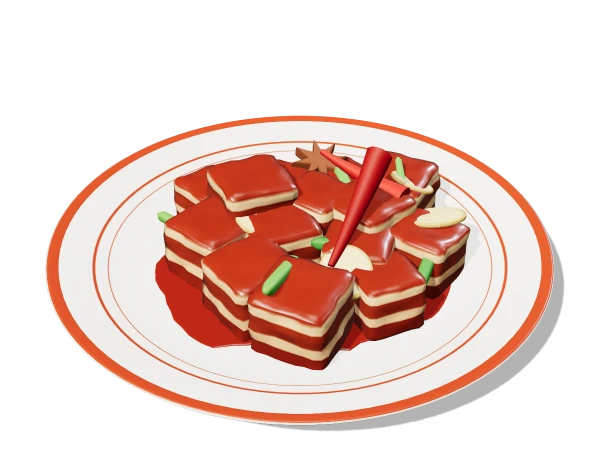
Taking Shanghai Red-braised Pork, Chairman Mao’s Red-braised Pork and Dongpo Pork apart side by side. The differences below are worked out item by item from the three recipes, with amounts scaled to 500 g of skin-on pork belly.
Drag any one and all three turn togetherIngredients, amounts and steps follow each recipe’s source; nobody has checked them line by line yet
The sugar goes in at different times: Shanghai Red-braised Pork adds it only at the end, to reduce; Chairman Mao’s Red-braised Pork melts it into a caramel first; Dongpo Pork adds it with the soy sauce.
Only Shanghai Red-braised Pork uses rice vinegar.
Only Chairman Mao’s Red-braised Pork uses star anise, cassia bark and dried red chillies.
Chairman Mao’s Red-braised Pork skips the rinse step.
Dongpo Pork uses no salt or oil.
Only Shanghai Red-braised Pork has to sear and rest.
Only Dongpo Pork has to line the pot first and steam.
Dongpo Pork uses the most wine: 140 ml; Shanghai Red-braised Pork 10 ml, Chairman Mao’s Red-braised Pork 17 ml.
Method side by side
Drawn to scale in real time (steps with a time range use the midpoint)
Prep
Fry
Caramel
Boil
Braise
Steam
Reduce
Plate
Hover a segment for the step and its time
Ingredients side by side
Scaled to 500 g of skin-on pork belly · One row per kind of ingredient; “only” marks what just one version uses, “most” marks a clearly bigger amount
Each recipe here follows its own cited source: Shanghai Red-braised Pork: Shanghai government portal; Chairman Mao’s Red-braised Pork: Fuchsia Dunlop’s cookbook; Dongpo Pork: Hangzhou municipal standard DB3301/T 0477.2—2024. Regional and family versions vary a lot; each one here is a single sourced version. The differences are computed from the recipe data; durations marked “est.” are our estimates.
The 3D models are illustrations. Adjust for your own pan and stove, and make sure meat, eggs and fillings are cooked through.